FREE SHIPPING across Canada for all orders over $99. Some restrictions may apply.

FREE SHIPPING across Canada for all orders over $99. Some restrictions may apply.
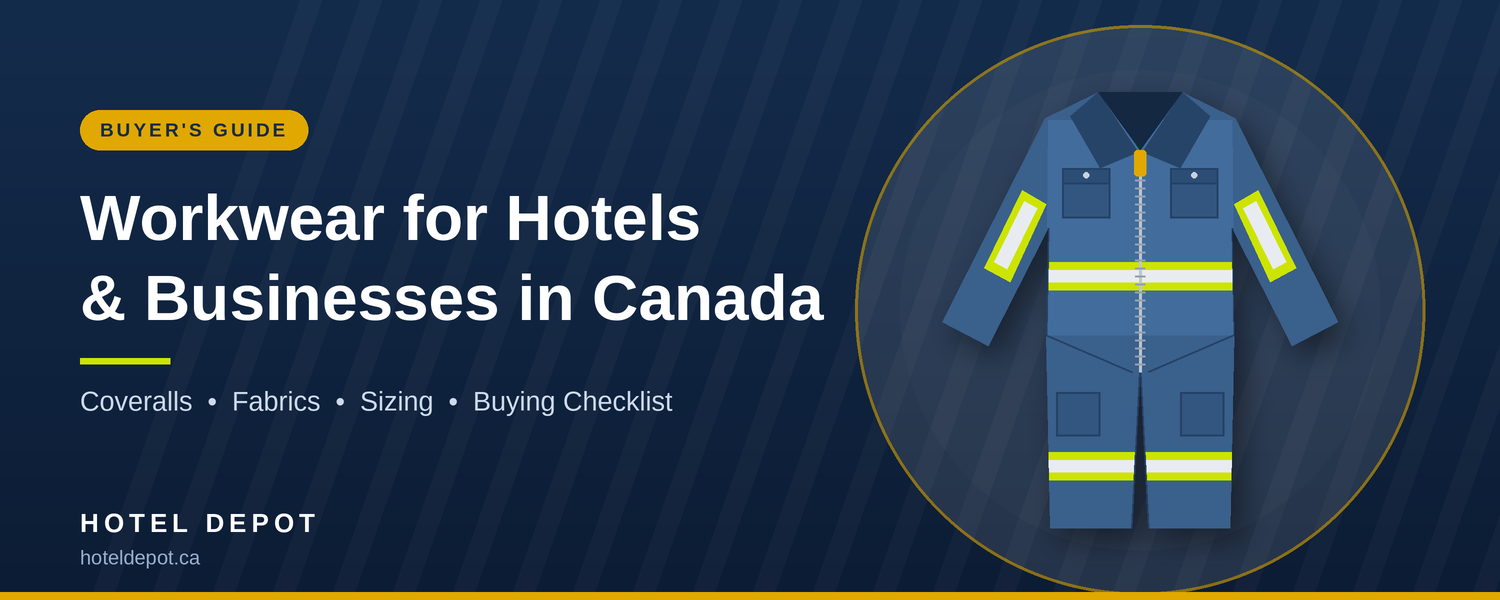
Coveralls, multi-pocket garments, reflective clothing and how to choose the right workwear for every team.
Choosing the right workwear is about more than finding a uniform that looks professional. Employees may spend many hours a day in their work clothing, so comfort, durability, functionality, fit and workplace requirements all matter.
From coveralls and utility clothing to reflective workwear and garments with multiple pockets, the right choice helps employees do their jobs comfortably while keeping a consistent, professional appearance.
Hotel Depot offers workwear and uniform solutions for businesses looking for practical clothing for their teams. Explore the Gears & Wears workwear collection to see available options.
Workwear is clothing designed for people whose jobs call for practical, durable and functional garments. Unlike ordinary clothing, it often includes features such as:
It is used across hospitality, housekeeping, maintenance, warehouses, facilities management, service businesses and many other workplaces.
The right workwear changes an employee’s everyday experience in five ways.
Important: Always check the product specifications and your applicable workplace requirements before buying workwear for a specific safety application.
Different jobs need different clothing, and no single style suits every employee.
Coveralls provide full-body coverage and are commonly considered for maintenance, service and other hands-on work. Depending on the design, they may include two-way zippers, utility pockets, long sleeves, a choice of colours and durable construction. To compare options, browse the Hotel Depot Gears & Wears collection.
A two-way zipper adds convenience when employees need easier access while wearing a full-body garment. When comparing coveralls, look at zipper construction, pocket placement, fabric, size range, fit, colour and the intended working environment.
For maintenance, service and hands-on employees, pockets are often the most useful feature of a garment. Before choosing, think about what employees actually carry. More pockets are not always better if their placement makes the garment uncomfortable or awkward to use.
Some environments require employees to be more visible, particularly around vehicles, equipment or outdoor work areas. Reflective workwear can include reflective tape or other high-visibility elements. Look beyond appearance: verify that the specific garment meets the safety standards that apply to your industry and location. In Canada, for example, high-visibility safety apparel is commonly assessed against CSA Z96, and some provinces and employers set their own requirements.
Maintenance and engineering teams are among the hardest-working users of uniforms in any hotel. They move between guest floors, mechanical rooms, laundry areas and outdoor spaces, and they carry tools while doing it.
For these roles, coveralls are worth a close look. Full-body coverage helps keep everyday clothing clean, utility pockets keep small tools close, and a two-way zipper adds flexibility. A few practical checks for hotel maintenance uniforms:
Fabric affects comfort, durability and how much effort a garment takes to look after. This table gives a general comparison. Always confirm the composition and care instructions on the individual product page.
Fabric type | Typical feel | Care and durability | Often chosen for |
Cotton | Soft and breathable | Comfortable, but may shrink or wrinkle more than blends | Indoor roles where comfort comes first |
Polyester-cotton blend | Balanced comfort and strength | Generally holds its shape and colour well through frequent washing | Everyday uniforms and coveralls for busy teams |
Polyester-rich fabrics | Lighter and smoother | Typically quick-drying and easy to maintain, but can feel less breathable | Roles where quick turnaround between washes matters |
Fabric weight, often listed in GSM (grams per square metre), also matters. Lighter fabrics generally suit warm or indoor settings, while heavier fabrics offer more durability and warmth. Ask for the weight when comparing garments.
Canadian working conditions change dramatically through the year, and uniforms should keep up.
Before placing a bulk order, work through these six factors.
Hotels employ people across many departments, and not every department needs the same uniform. A maintenance employee may need practical coveralls, while a front-desk employee needs a more formal hospitality uniform. The table below gives a starting point.
Department | What to prioritize | Garment types to consider |
Maintenance and engineering | Durability, utility pockets, freedom of movement | Coveralls, multi-pocket work garments |
Housekeeping | Comfort, easy movement, easy care | Comfortable, practical uniforms |
Facilities and grounds | Weather suitability, visibility where needed | Coveralls, reflective workwear |
Kitchen and restaurant | Easy laundering, comfort in warm areas | Uniforms suited to food-service environments |
Laundry | Breathability, comfort during physical work | Lightweight, practical garments |
Front desk and guest-facing | Polished appearance, brand consistency | Formal hospitality uniforms |
To see the wider range, visit Hotel Depot Uniforms & Accessories. Looking at workwear alongside other uniform categories makes it easier to outfit every department instead of forcing one style on everyone.
Good care extends the life of a garment and protects your investment.
Bulk orders go more smoothly with a little preparation.
There is no number that works for every business. The right quantity depends on how many days employees work, how often garments are laundered, the type of job, cleaning requirements and seasonal conditions. A common starting point is enough sets to cover the days between washes, plus a spare.
Also keep replacement garments on hand for new employees, damaged clothing and unexpected situations. For larger teams, a simple uniform inventory that tracks sizes, quantities and replacement dates keeps things organized.
The lowest price is not always the lowest cost. A simple way to compare garments is cost per wear: the purchase price divided by the number of times the garment is worn before it needs replacing.
As an illustration only, a garment that costs more but lasts twice as long can cost less per wear than a cheaper one that wears out quickly. Add in the time spent replacing garments and reordering, and durable workwear often proves the better value for daily-use roles.
Before ordering, run through this checklist:
â Identify each employee’s job role
â Determine the required garment type
â Check available sizes
â Review fabric and product specifications
â Check pockets and functional features
â Consider colour requirements
â Check whether reflective elements are required
â Confirm applicable workplace standards
â Determine quantity per employee
â Keep replacement sizes available
â Establish a uniform replacement schedule
Following this approach helps you avoid choosing workwear on appearance or price alone.
The best choice depends on the employee’s tasks and working environment. Coveralls are a practical option for many maintenance and service roles because they offer full-body coverage and can include utility pockets and two-way zippers. Consider fabric weight, fit and the tools your team carries every day.
Yes, for the right departments. Coveralls suit maintenance, engineering and facilities teams, while customer-facing departments such as the front desk usually need a more formal hospitality uniform.
Start with the job and working environment, then compare fabric, durability, fit, pockets, colour and any workplace requirements. Check the product specifications rather than choosing on appearance or price alone.
Not necessarily. Reflective garments are generally chosen for environments where visibility matters, such as areas around vehicles, equipment or outdoor work. Confirm the requirements for the specific job, and verify that a garment meets the applicable standards before using it as safety apparel.
Use the manufacturer’s size chart and collect accurate measurements from each employee before placing a large order. Ordering a small range of extra sizes helps cover new hires and replacements.
There is no single number. It depends on laundry frequency, working days, job type and how quickly garments wear out. Many businesses issue enough sets to cover the days between washes, plus a spare.
Follow the care label on each garment. Wash similar colours together, close zippers before washing, avoid unnecessary high heat, and repair small issues such as loose stitching before they get worse.
Businesses can explore the Gears & Wears collection at Hotel Depot for workwear options for maintenance, housekeeping, facilities and other teams.
The right workwear balances comfort, functionality, durability and appearance. Whether you are outfitting a small maintenance team or a larger hospitality operation, start by identifying what each employee actually needs from their work clothing.
Explore Gears & Wears at Hotel Depot to find workwear for different workplace requirements, and visit Hotel Depot’s Uniforms & Accessories collection for additional uniform categories.


 USD